
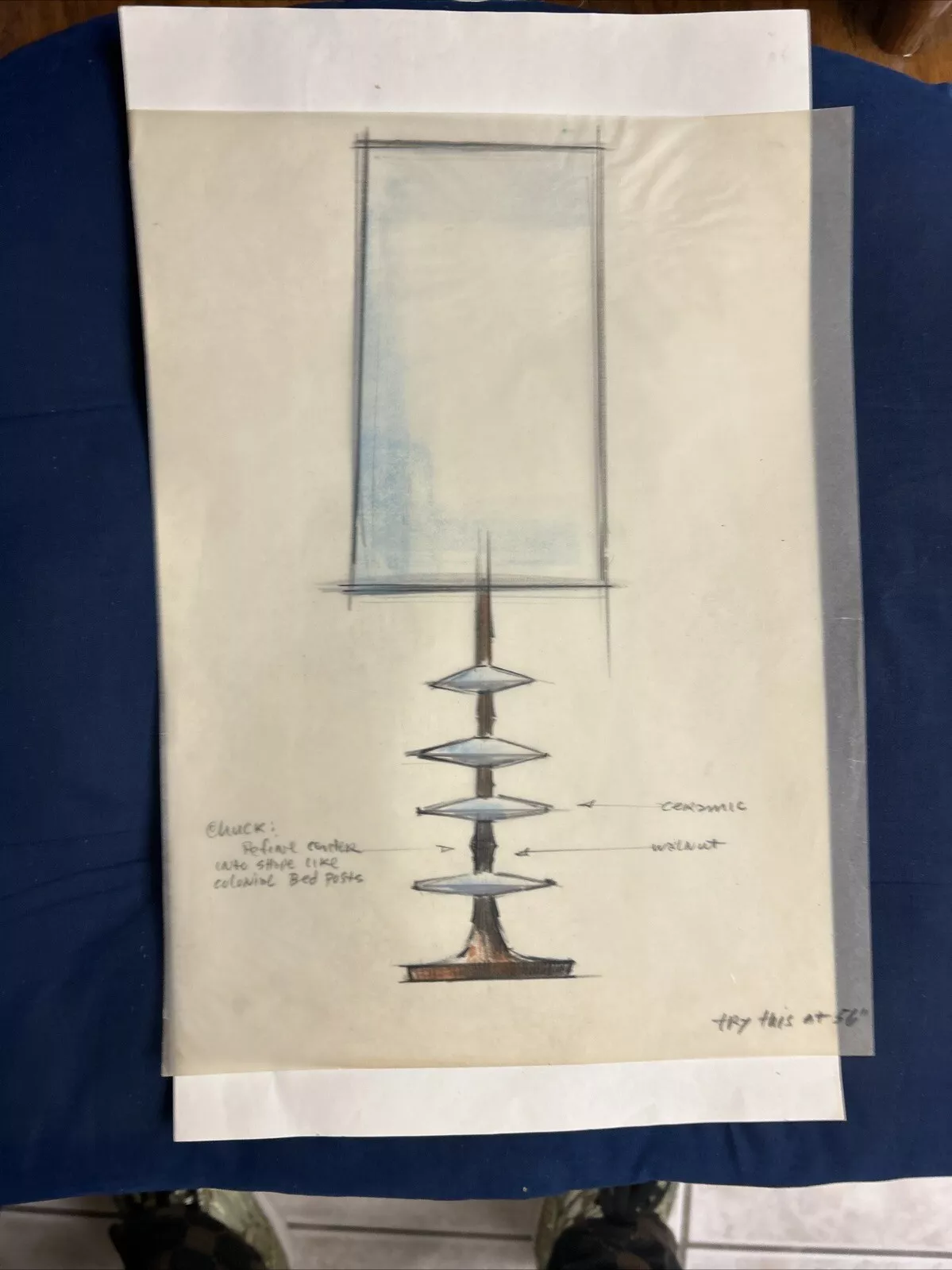
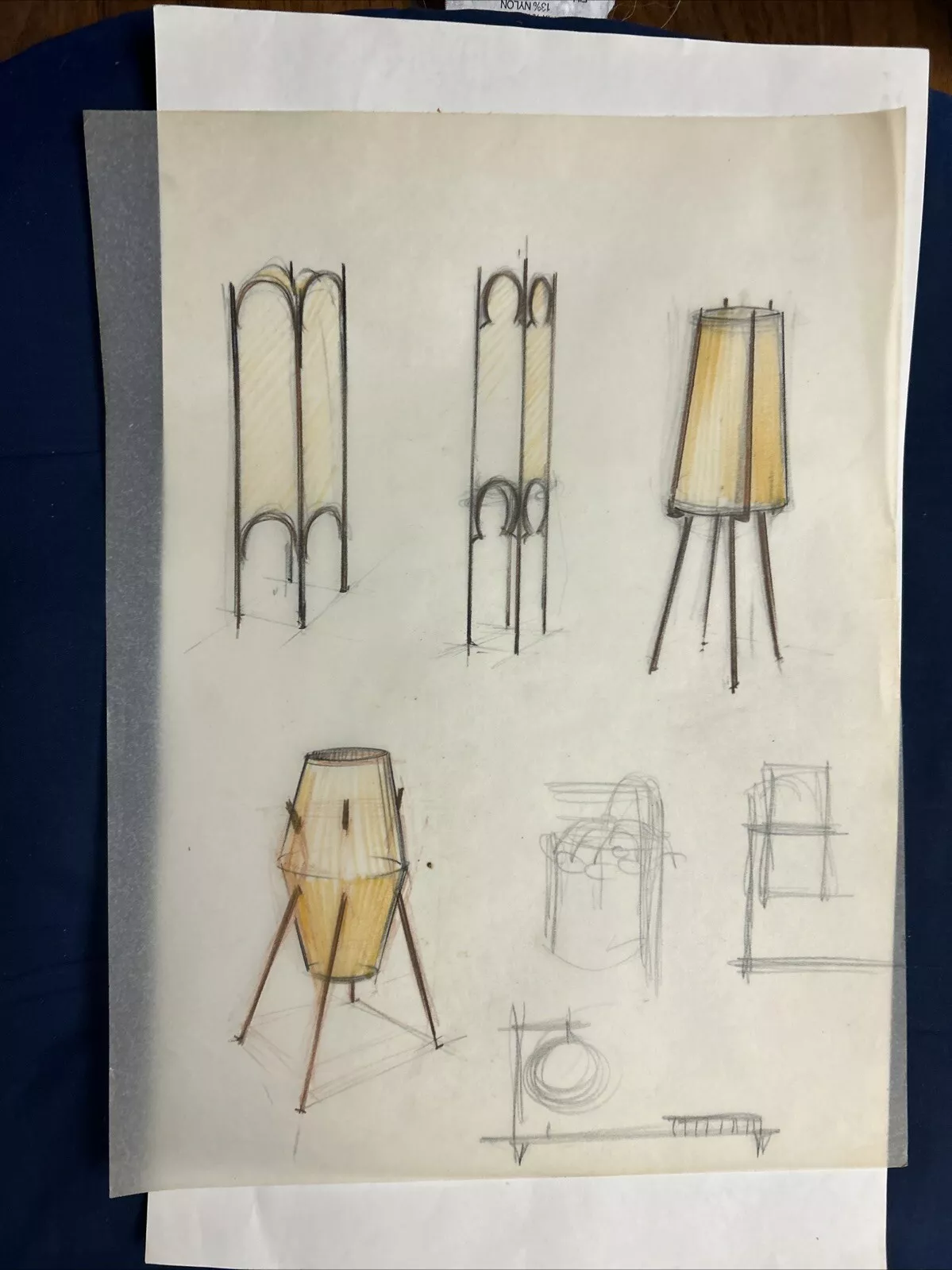
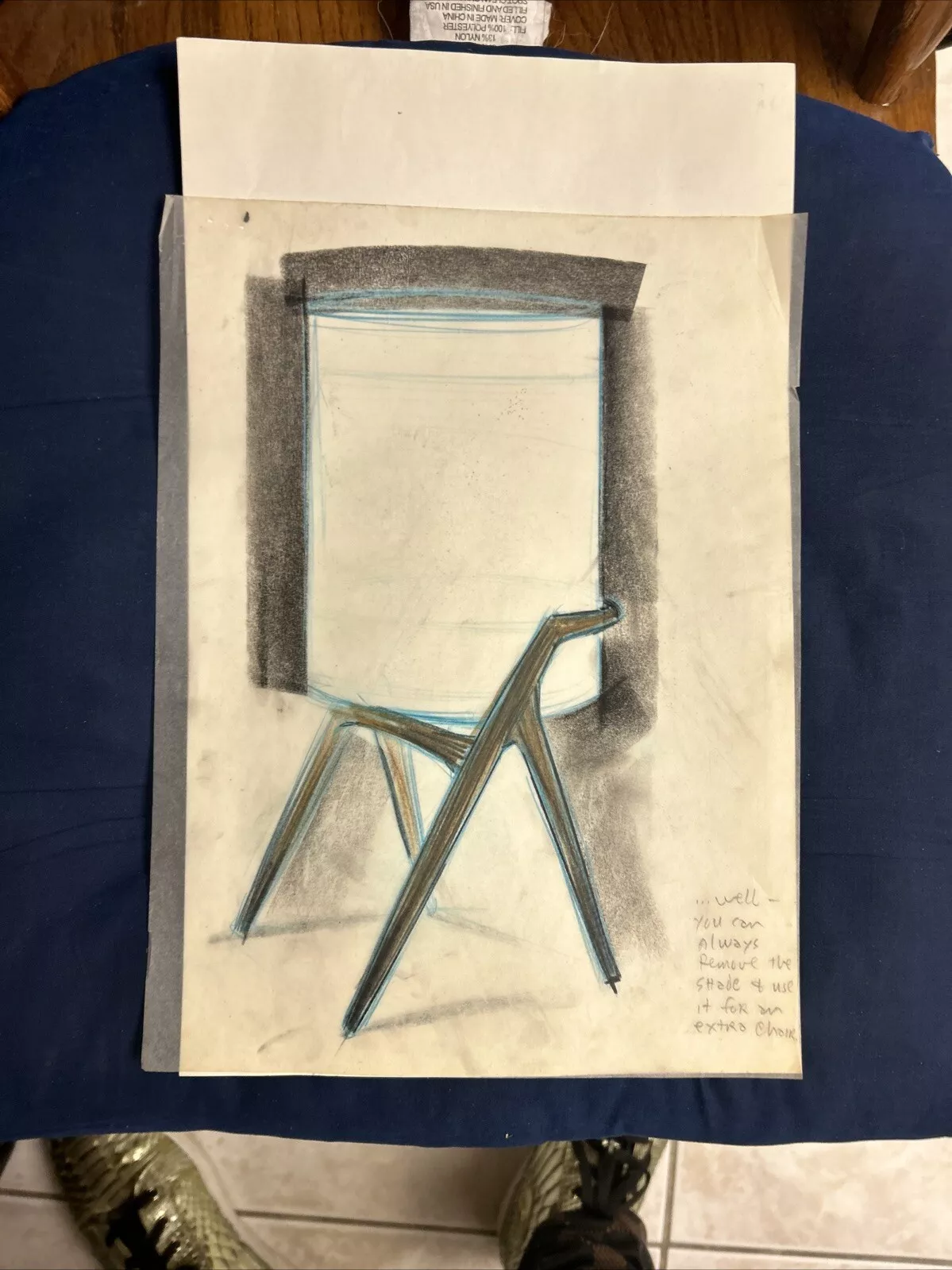
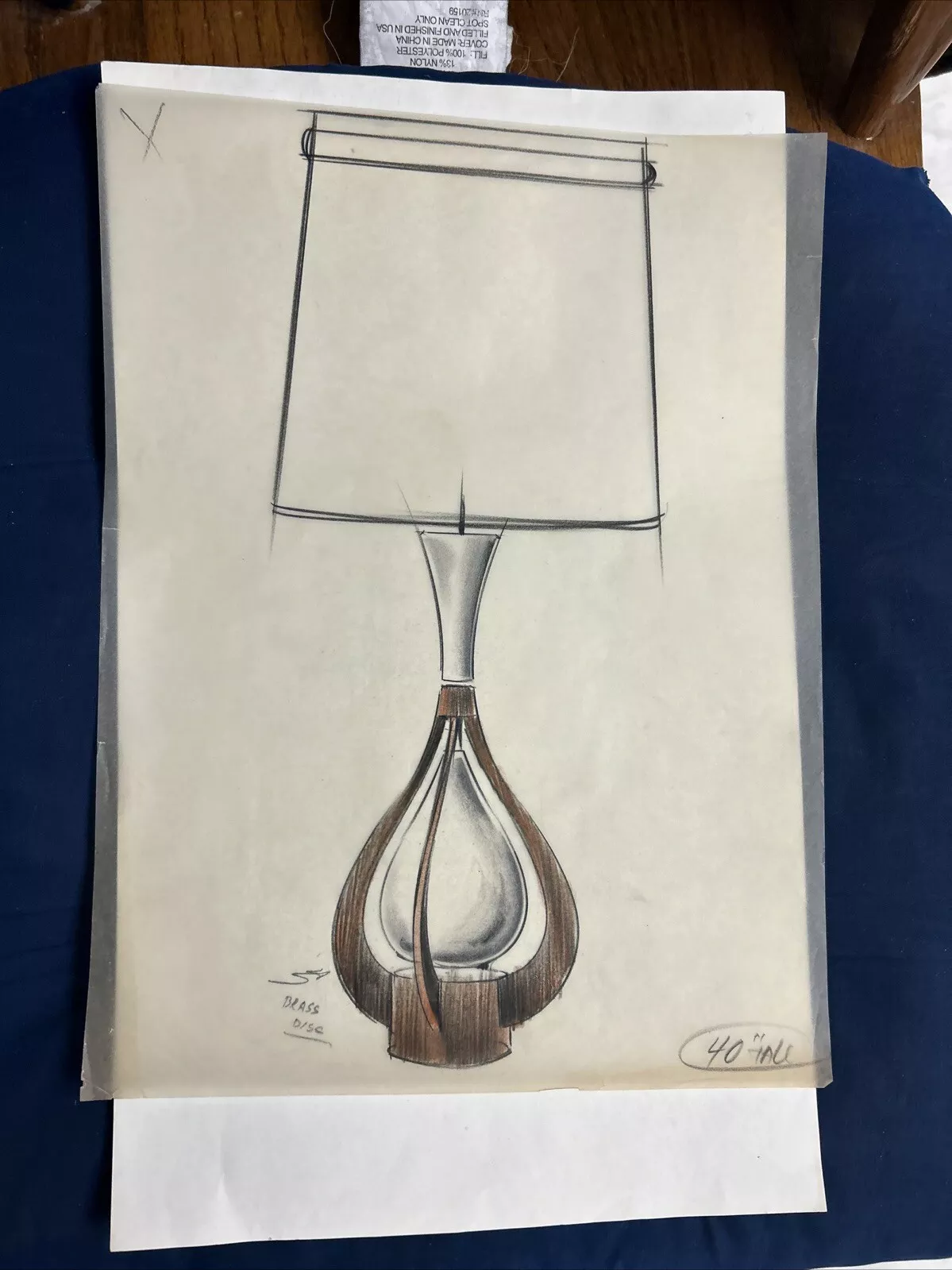
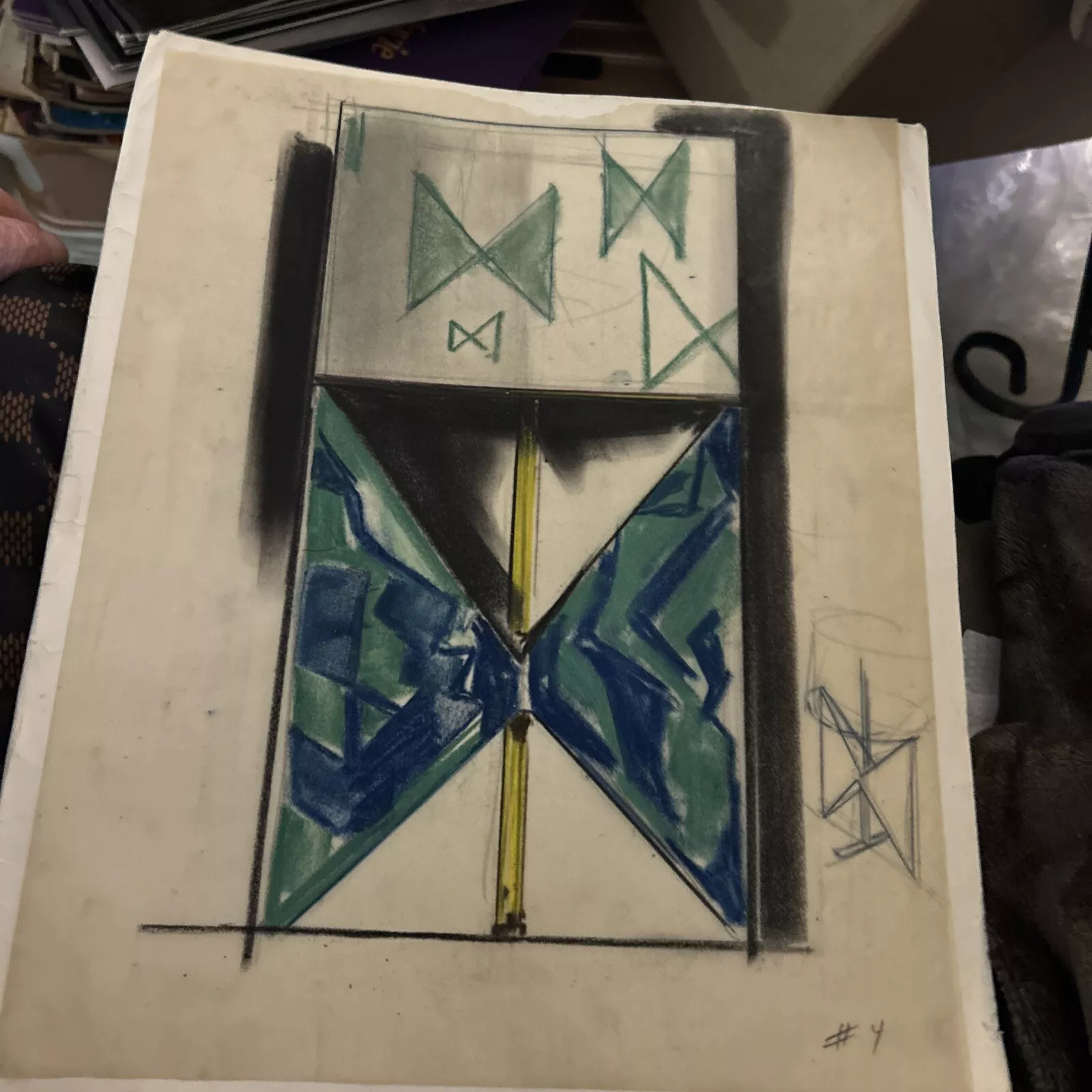
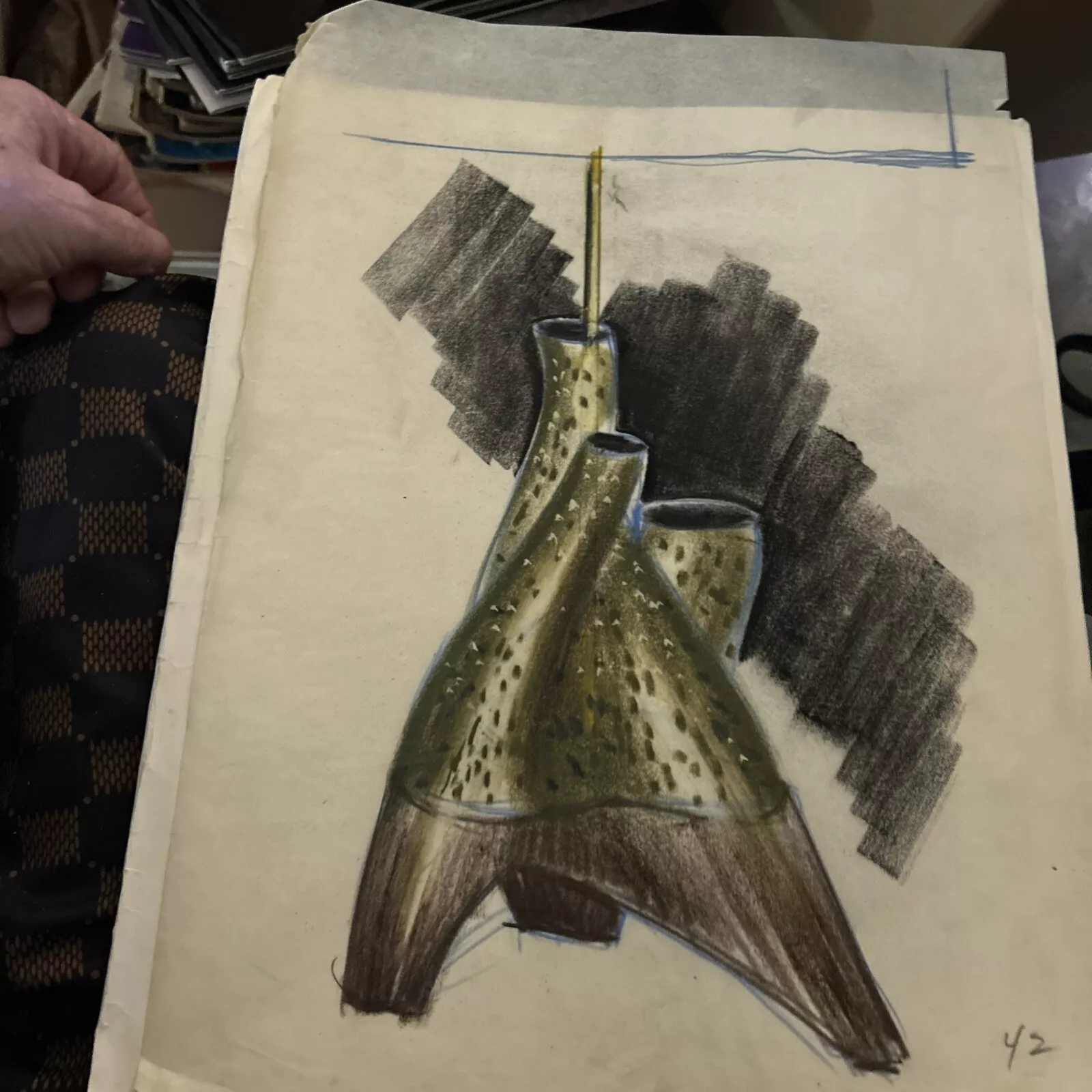
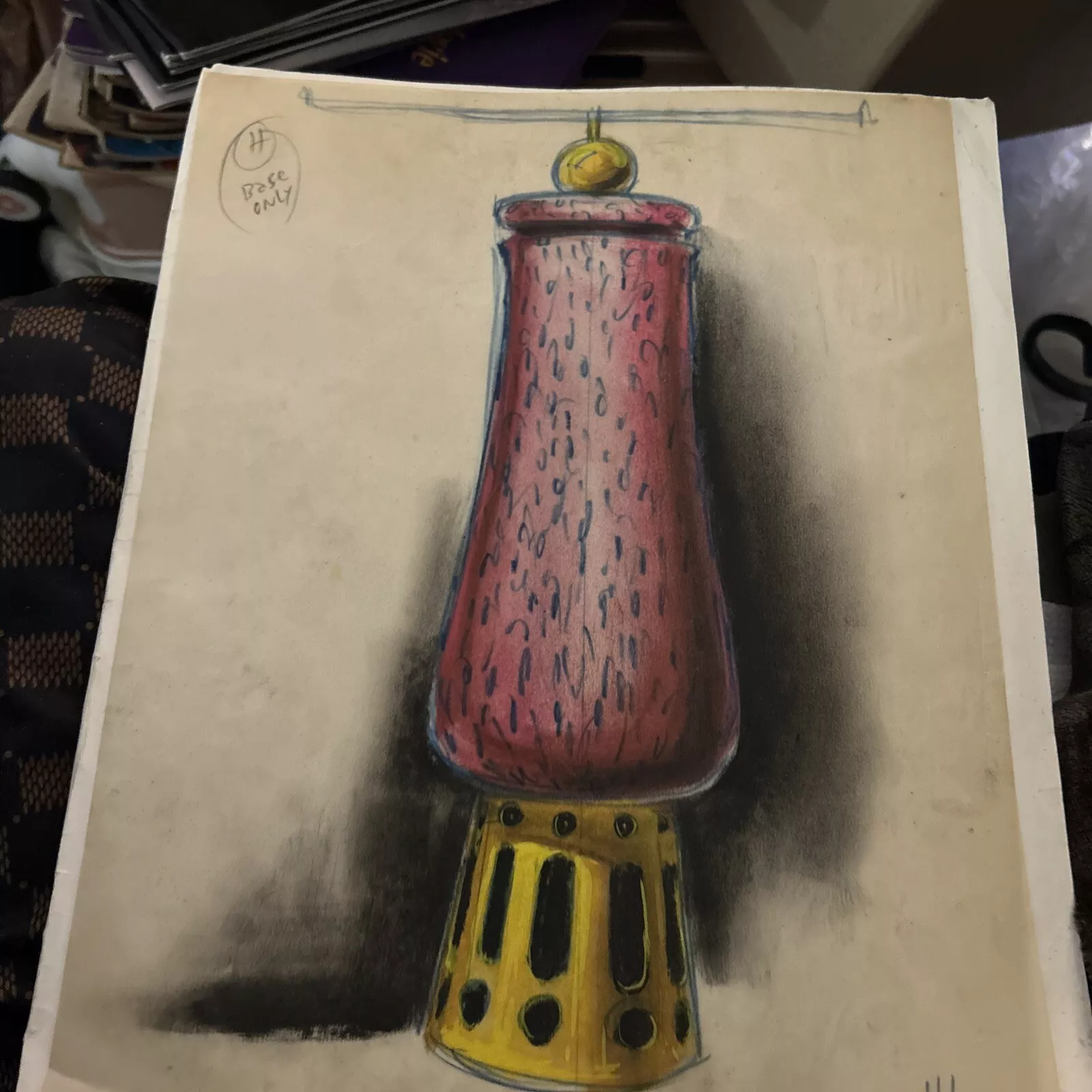
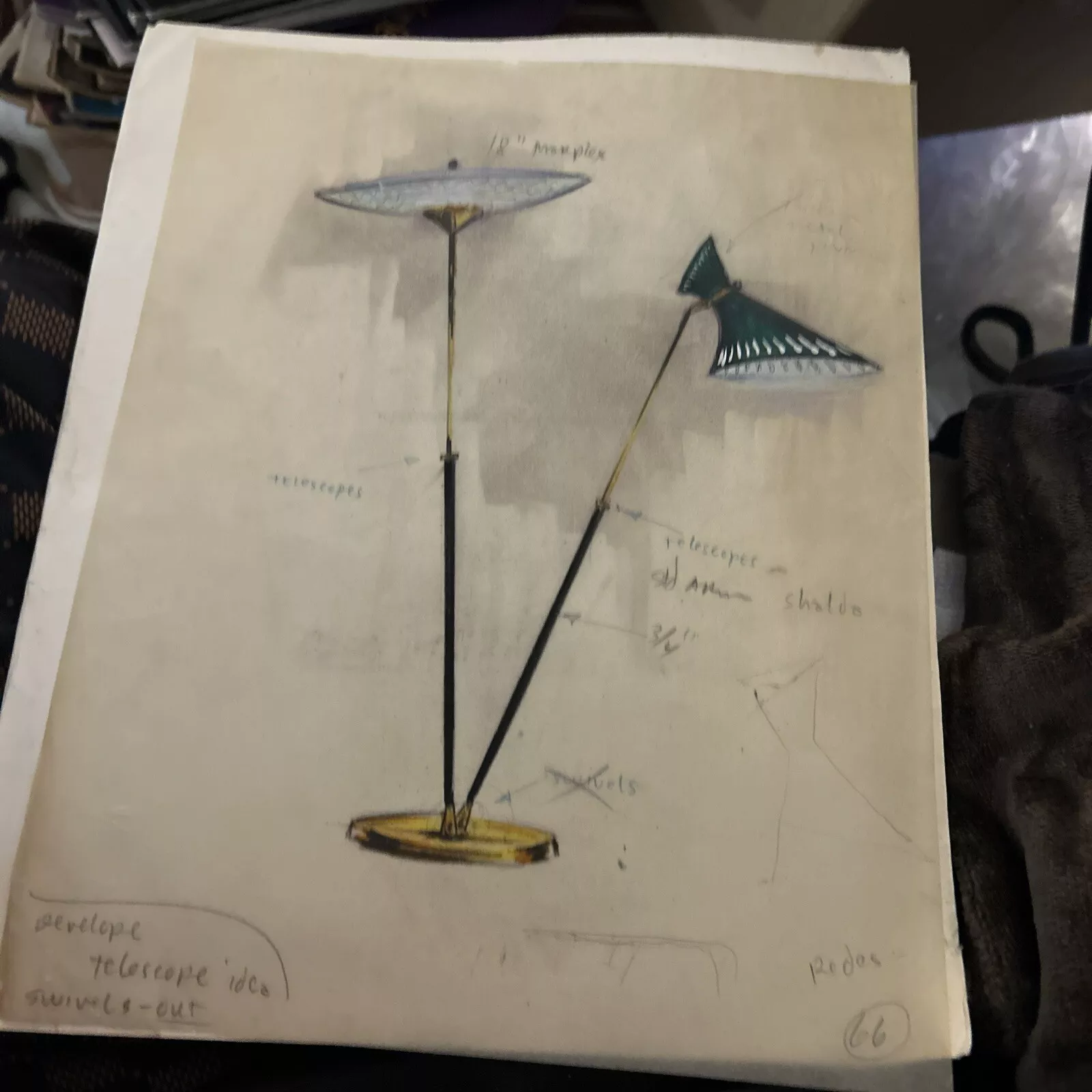
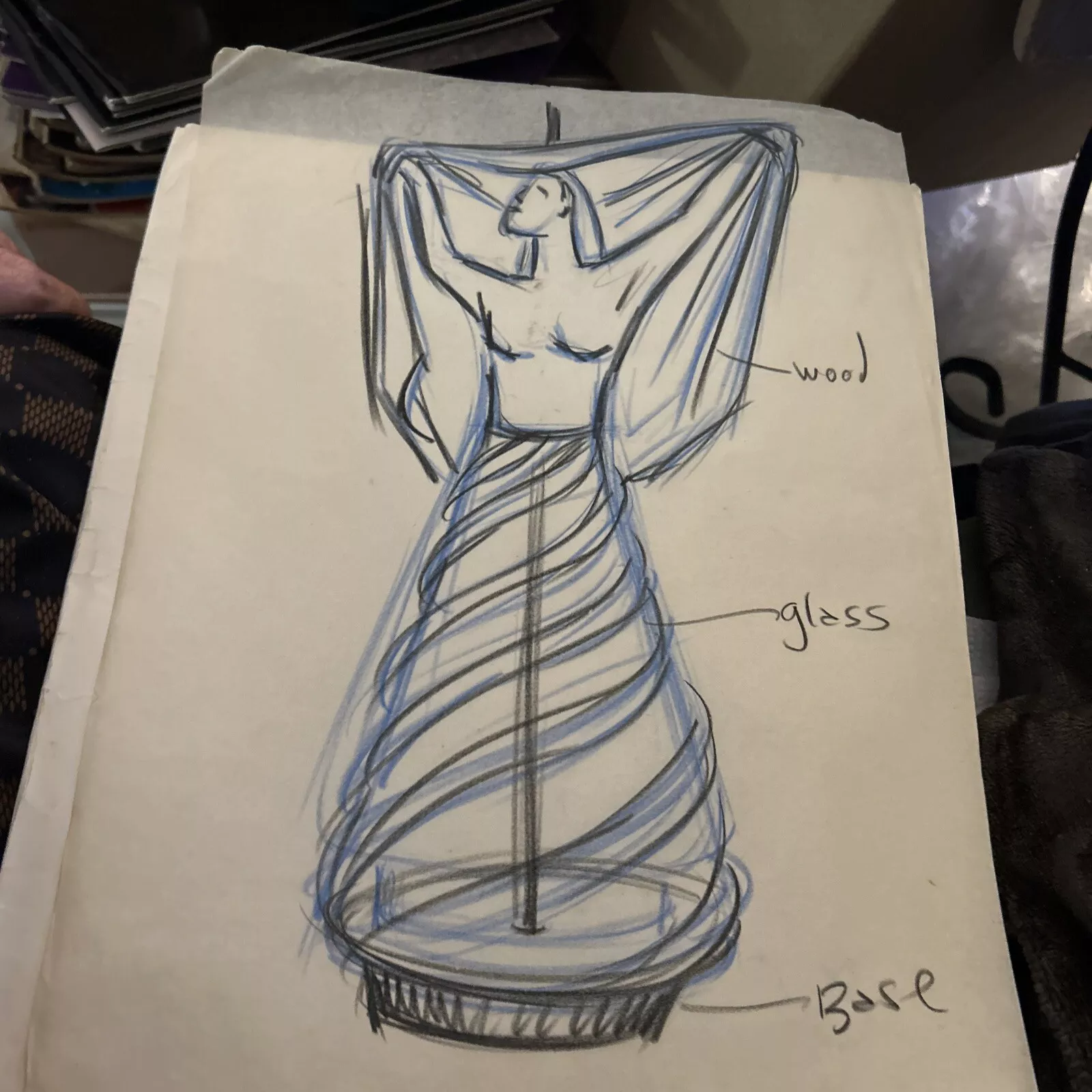
Original sketches by "the Father of Modern Lighting"
Arthur Jacobs was known as "the Father of Modern Lighting" in mid-century modern design circles. As the principal designer for Modeline of California during the 1950s and 1960s, he created numerous iconic lamp designs that exemplify the mid-century modern aesthetic. His innovative use of materials including wood, brass, and ceramic helped define the look of post-war American interiors.
While biographical information about Jacobs is limited, his work speaks volumes about his design philosophy and technical skill. His lamps are highly collectible in the vintage and antique market today, with original pieces typically selling for $1,000-$3,500 depending on model, condition, and rarity.
Modeline of California was a prominent lighting manufacturer during the mid-century modern period (1950s-1970s). Based in California, as the name suggests, the company was known for high-quality craftsmanship and innovative designs. Modeline employed several notable designers including Arthur Jacobs as principal designer, John Keal as design director, and Jack Haywood as lead designer.
The company produced a wide range of lighting including table lamps, floor lamps, and pendant lights. Products were typically identified by model numbers (e.g., Model 1525, Model 9420 "Infinity"), and pieces are now highly sought after by collectors of mid-century modern design.
Arthur Jacobs' designs are characterized by clean, sculptural forms that emphasize organic shapes and geometric precision. His innovative use of materials included walnut, teak, and other woods, often featured in combinations with brass. The lamps typically had distinctive shades with textured or patterned materials.
Jacobs emphasized both form and function - his pieces were decorative but also provided effective lighting. His designs reflected the optimism and forward-thinking aesthetic of post-war America, capturing the spirit of a nation looking toward the future.
Among Arthur Jacobs' most celebrated designs are:
The sketches in this collection appear to be original design concepts for Modeline lamps. Several sketches show the distinctive wishbone/boomerang shapes that became signature Arthur Jacobs designs. The notes on materials ("ceramic," "walnut") match known Modeline production materials, and the sketches include measurements and production notes suggesting they were working drawings.
Handwritten comments like "Awful ain't it" and "try this at 32"" suggest these were part of the design development process, offering a rare glimpse into the creative mind of a master designer. These sketches represent an important artifact of mid-century modern design history, providing insight into the design process behind iconic lighting pieces.
Mid-century modern design flourished in post-WWII America (approximately 1945-1975). The style emphasized clean lines, organic forms, and a blend of traditional and new materials. California was a particular hotbed for mid-century modern design, with many influential designers and manufacturers based there.
Lighting design was a crucial element of mid-century interiors, with designers like Arthur Jacobs creating pieces that were both functional and sculptural. The sketches in this collection capture a moment in design history when American manufacturers were pushing the boundaries of what was possible in residential lighting.
Original Modeline lamps designed by Arthur Jacobs are highly prized by collectors. The original design sketches would be of significant interest to collectors and design museums, particularly given their provenance and the insight they provide into the design process.
The sketches represent a unique opportunity to study the evolution of mid-century modern design from concept to production, making them valuable both as historical artifacts and as educational resources for understanding the design process of the period.