Mid-Century Modern Design
Explore the revolutionary design movement that emphasized clean lines, functionality, and harmony with nature, spanning roughly from 1945 to 1970.
About Mid-Century Modern
Mid-century modern design emerged in the post-World War II era as a response to both the optimism of the time and the need for practical, affordable design solutions. This movement was characterized by clean lines, minimal ornamentation, large windows, open floor plans, and an emphasis on bringing the outdoors inside.
The movement was heavily influenced by the Bauhaus school and architects like Frank Lloyd Wright, whose organic architecture principles helped shape the aesthetic. Mid-century modern design wasn't just about buildings—it encompassed furniture, lighting, graphics, and everyday objects, creating a cohesive design philosophy that emphasized function, simplicity, and integration with nature.
Key Characteristics
- Clean Lines: Simple, straight lines with minimal curves or ornamentation
- Open Floor Plans: Flowing spaces that connected different areas of the home
- Large Windows: Expansive glass surfaces that brought natural light indoors
- Natural Materials: Wood, stone, and metal used in their natural states
- Indoor-Outdoor Living: Seamless transitions between interior and exterior spaces
- Functionality: Form follows function, with every element serving a purpose
Mid-Century Modern Artifacts in Our Collection

Arthur Jacobs Lamp Designs
Original sketches by 'the Father of Modern Lighting' for Modeline of California. Jacobs pioneered the clean, geometric forms that became synonymous with mid-century modern lighting.
View Details
Frank Lloyd Wright: An Autobiography
Wright's personal account of his design philosophy, which heavily influenced the mid-century modern movement through his emphasis on organic architecture and integration with nature.
View Details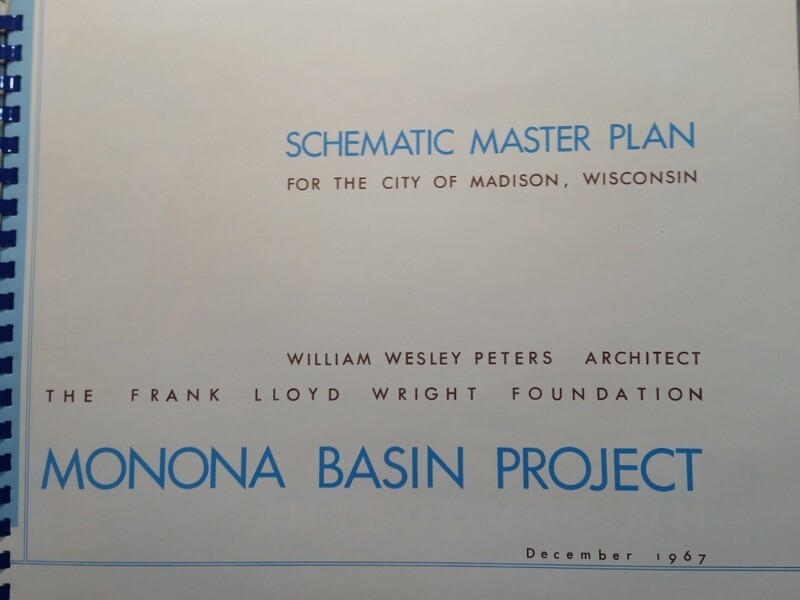
Monona Basin Project
A 1967 urban planning document that exemplifies mid-century modern principles applied to city-scale design, emphasizing integration with natural waterfront features.
View DetailsMid-Century Modern Timeline
Post-War Optimism
The end of World War II brings new materials, technologies, and a desire for modern living that breaks from traditional styles.
Case Study Houses
Arts & Architecture magazine launches the Case Study House Program, commissioning architects to design modern homes for post-war living.
Golden Age
Mid-century modern reaches its peak with iconic furniture designs by Charles and Ray Eames, George Nelson, and others.
Mass Production
Mid-century modern principles are adapted for mass production, making modern design accessible to the growing middle class.
Evolution
The movement evolves and fragments as new styles emerge, but its influence on contemporary design remains strong.
Key Influences and Designers
Frank Lloyd Wright
Wright's organic architecture and Prairie School style laid the groundwork for mid-century modern's emphasis on horizontal lines and integration with nature.
Bauhaus Movement
The German design school's "form follows function" philosophy and emphasis on clean, geometric forms heavily influenced mid-century aesthetics.
Charles and Ray Eames
Pioneered new materials and manufacturing techniques, creating iconic furniture that embodied mid-century modern principles.
Richard Neutra
Austrian-American architect who brought European modernism to California, creating the quintessential mid-century modern home.
George Nelson
Designer and design director who helped popularize mid-century modern furniture and accessories through Herman Miller.
Arthur Jacobs
Known as "the Father of Modern Lighting," Jacobs created the clean, geometric lighting fixtures that defined mid-century interiors.
Legacy and Contemporary Influence
Mid-century modern design continues to influence contemporary architecture and design. Its emphasis on simplicity, functionality, and connection to nature resonates with today's sustainable design movements. Many mid-century modern pieces have become highly collectible, and the style has experienced several revivals since its original heyday.
The movement's impact extends beyond aesthetics to fundamental design principles that remain relevant today: the importance of natural light, the value of open spaces, and the integration of indoor and outdoor living. These concepts continue to shape how we think about modern living spaces.