Signed First Edition (1943)
| Title | Frank Lloyd Wright: An Autobiography |
|---|---|
| Creator | Frank Lloyd Wright |
| Publisher | Duell, Sloan and Pearce, New York |
| Publication Date | 1943 |
| Format | Hardcover with orange/terracotta cloth binding |
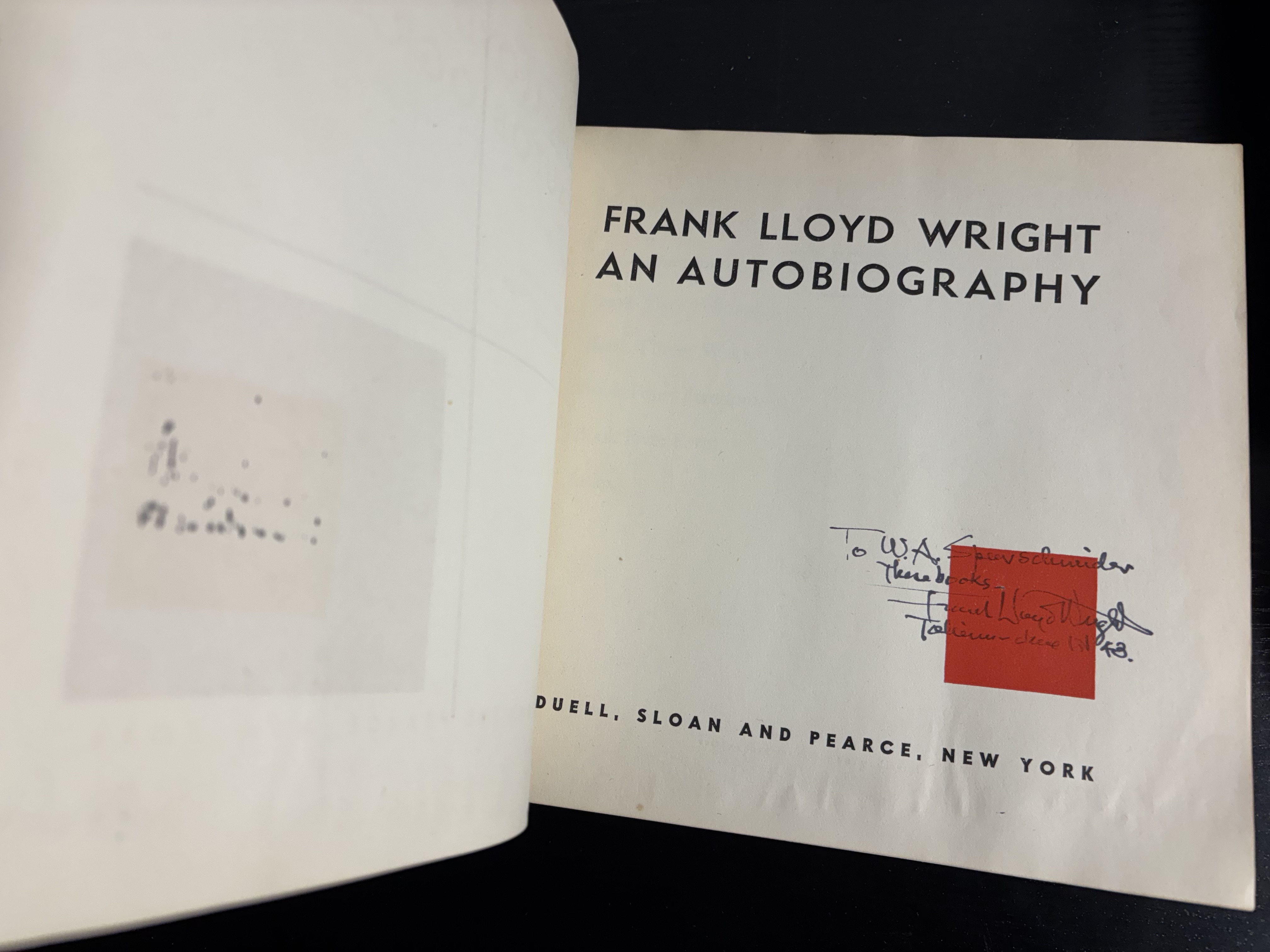
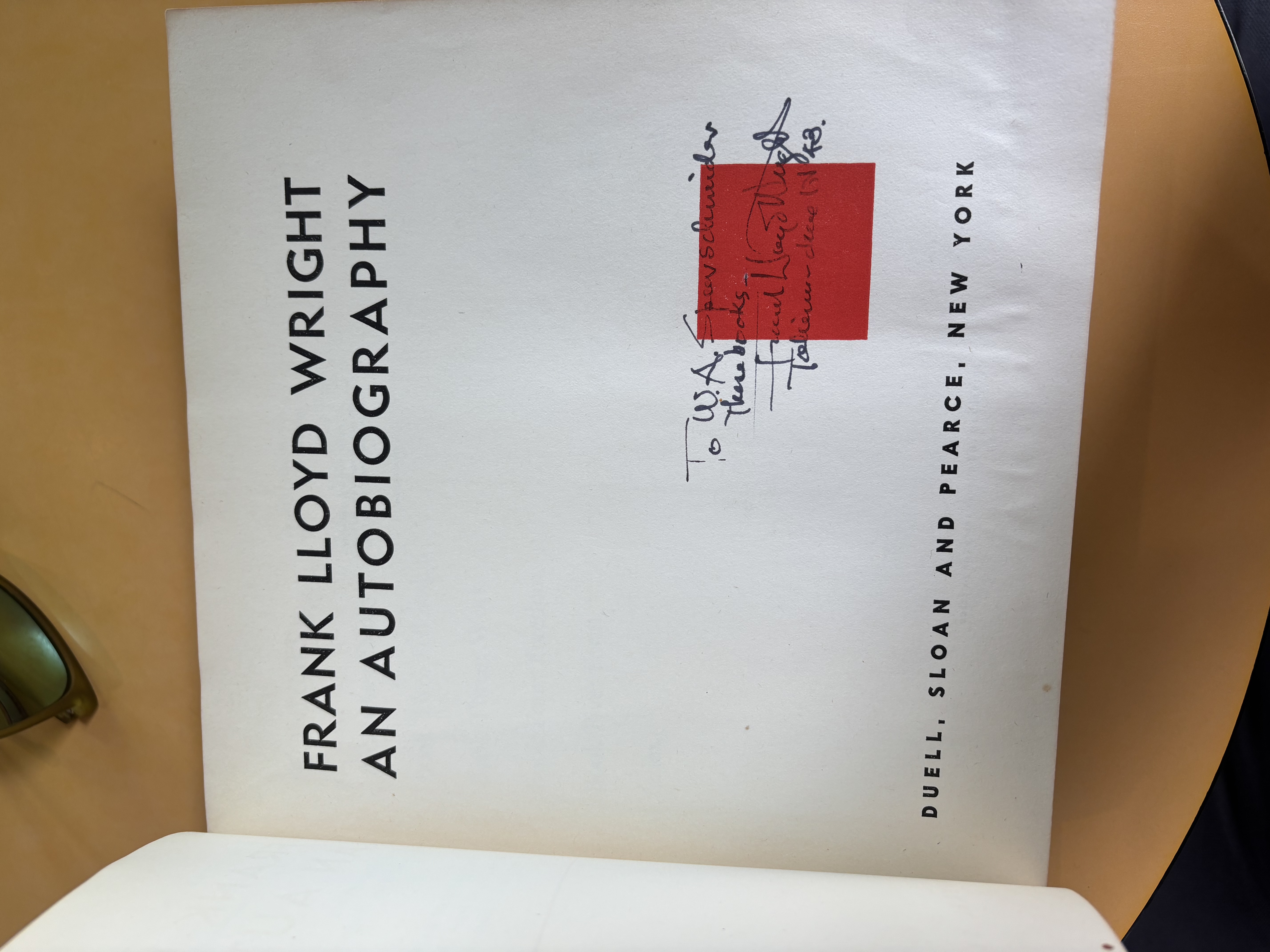
| Signature | Signed "To W.A. Speerschneider" and dated 1943 |
| Distinctive Feature | Red square on title page where Wright typically signed |
| Pages | 561 |
| Dimensions | Approximately 8.75" x 8.5" |
This is a signed first edition of Frank Lloyd Wright's autobiography, published by Duell, Sloan and Pearce in 1943. The book features Wright's distinctive orange/terracotta cloth binding, a color that became closely associated with his work and personal brand. The title page includes the iconic red square where Wright typically placed his signature, and in this copy, he has signed and dedicated it "To W.A. Speerschneider" with the date 1943.
This edition was a revised and expanded version of Wright's autobiography, originally published in 1932. It was released as the initial volume in the Frank Lloyd Wright series by Duell, Sloan and Pearce, and contains selected writings on architecture spanning from 1894 to 1940. At 561 pages, it provides a comprehensive look at Wright's life, philosophy, and architectural achievements.
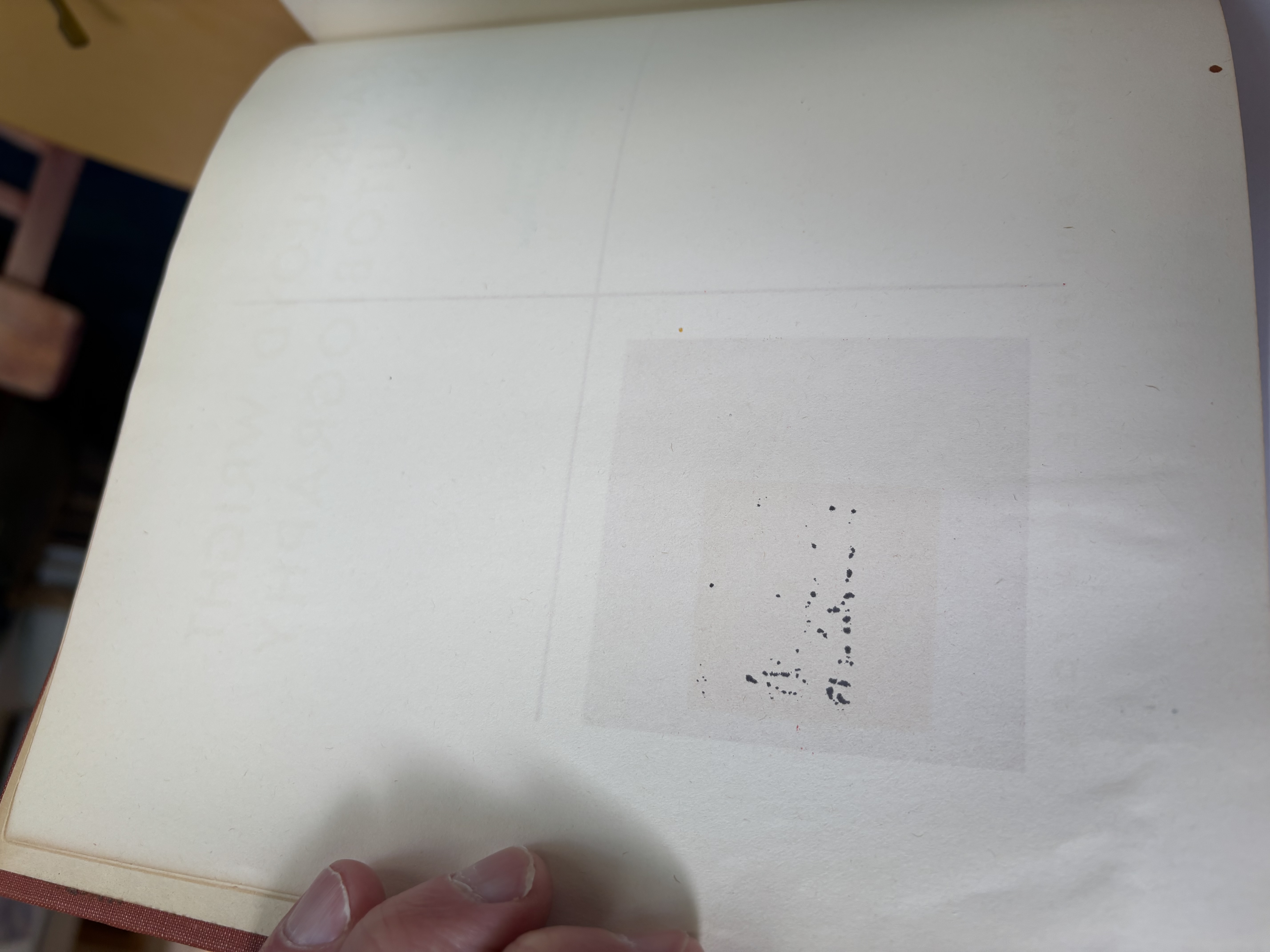
The book's unusual square format (approximately 8.75" x 8.5") reflects Wright's interest in geometric forms and his preference for non-standard book designs. The binding is in good condition, with some minor wear consistent with its age, while the interior pages remain clean and intact.

Frank Lloyd Wright's autobiography is considered by many scholars to be his best writing and a key document in understanding his architectural philosophy and personal life. Published during the latter part of his career, this 1943 edition captures Wright at a time when he was already recognized as one of America's most influential architects but was still actively developing projects like Taliesin West and mentoring apprentices through his Taliesin Fellowship.
The autobiography provides invaluable insight into Wright's development as an architect, his design principles, and his often controversial personal life. It reveals the thinking behind his concept of "organic architecture" and his belief that buildings should be in harmony with their natural surroundings—ideas that revolutionized 20th-century architecture and continue to influence designers today.
Wright's practice of signing books with his name in a red square became one of his distinctive trademarks. The red square was inspired by the traditional signature seals used by Japanese artists, reflecting Wright's deep appreciation for Japanese aesthetics. This signature style adds both authenticity and significant value to this edition.
The dedication to W.A. Speerschneider adds a layer of provenance to this particular copy, connecting it to someone who likely had a personal or professional relationship with Wright. Such personalized dedications provide a tangible link to Wright's network of clients, colleagues, and admirers.
Educational toys that influenced Wright's design philosophy and approach to geometric forms.
View Details
A small vase created by one of Frank Lloyd Wright's apprentices at Taliesin.
View DetailsOur research on this artifact draws from multiple sources, including auction records, bibliographic references, and scholarly works on Frank Lloyd Wright. The authentication of the signature has been verified through comparison with other known examples of Wright's handwriting from this period.
For more detailed information about this artifact and its historical context, you can download our comprehensive research document: