Design Education
Explore the educational foundations that shaped modern design thinking, from Froebel's kindergarten gifts to architectural apprenticeships.
The Foundation of Design Thinking
Design education has evolved significantly over the past two centuries, but certain foundational principles remain constant. The artifacts in this collection demonstrate how educational tools and methodologies have shaped the way designers think about form, function, and the relationship between objects and their users.
From Friedrich Froebel's revolutionary kindergarten system to Frank Lloyd Wright's Taliesin Fellowship, innovative educational approaches have consistently produced breakthrough design thinking. These educational philosophies emphasized hands-on learning, understanding of materials, and the development of spatial reasoning skills that became fundamental to modern design practice.
Froebel's Gifts: The Foundation of Modern Design Education
Friedrich Froebel (1782-1852)
Friedrich Froebel, the German educator who founded the kindergarten movement, created a series of educational materials called "Gifts" that would profoundly influence design education. These carefully designed geometric forms taught children about shape, pattern, symmetry, and spatial relationships.
Froebel's Gifts consisted of wooden blocks, tablets, and other geometric forms that children could manipulate to create patterns and structures. The system was revolutionary because it recognized that children learn best through play and hands-on exploration rather than rote memorization.
The Gifts System
- Gift 1: Soft colored balls
- Gift 2: Wooden sphere, cube, and cylinder
- Gift 3: Eight small cubes forming a larger cube
- Gift 4: Eight rectangular blocks
- Gift 5: Twenty-seven small cubes, some divided
- Gift 6: Twenty-seven rectangular blocks
Influence on Famous Designers
Frank Lloyd Wright
Wright credited his childhood experience with Froebel blocks as fundamental to his architectural thinking. The geometric patterns and spatial relationships he learned through play directly influenced his Prairie School designs and organic architecture philosophy.
"The smooth cardboard triangles and maple wood blocks... All are in my fingers to this day." - Frank Lloyd Wright
Le Corbusier
The influential architect and urban planner was also influenced by Froebel's educational methods, particularly the emphasis on geometric forms and modular construction that became central to modernist architecture.
Buckminster Fuller
Fuller's geodesic domes and systematic approach to design reflected the geometric thinking fostered by Froebel's educational system, emphasizing efficiency and structural logic.
Johannes Itten
The Bauhaus master teacher incorporated Froebel-inspired exercises into the famous preliminary course, emphasizing hands-on exploration of materials and forms.
The Taliesin Fellowship: Wright's Educational Legacy
Frank Lloyd Wright established the Taliesin Fellowship in 1932 as an alternative to traditional architectural education. This apprenticeship program combined practical building experience with philosophical discussions about design and life.
Taliesin Educational Principles
Learning by Doing
Apprentices learned architecture by actually building structures, not just studying them in books.
Integration of Arts
The curriculum included music, theater, farming, and cooking alongside architectural training.
Connection to Nature
Students lived and worked in natural settings, developing sensitivity to landscape and materials.
Mentorship Model
Direct apprenticeship with Wright and senior fellows provided personalized guidance.
Educational Artifacts in Our Collection
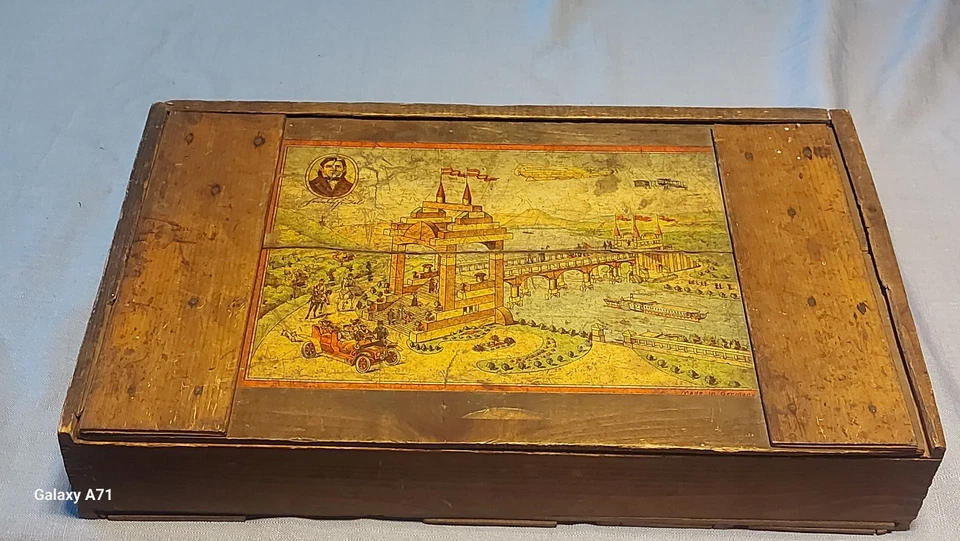
Froebel Blocks
An authentic set of Froebel's educational blocks that influenced Frank Lloyd Wright and countless other designers through hands-on geometric exploration.
View Details
Arthur Jacobs Design Sketches
Original design sketches showing the iterative process of developing mid-century modern lighting, demonstrating design thinking in action.
View Details
Shao Fang Sheng Pottery
Work by a Taliesin Fellowship apprentice, showing how Wright's educational philosophy influenced his students' artistic development.
View DetailsLegacy in Modern Design Education
The educational principles pioneered by Froebel and Wright continue to influence design education today. Many contemporary design schools emphasize hands-on learning, interdisciplinary approaches, and the importance of understanding materials and processes.
Contemporary Applications
- Design Thinking: Modern design thinking methodologies echo Froebel's emphasis on learning through experimentation and iteration.
- Maker Spaces: Contemporary maker spaces and fab labs provide hands-on learning environments similar to Wright's Taliesin workshops.
- Interdisciplinary Programs: Many design schools now integrate multiple disciplines, following Wright's holistic educational model.
- Sustainable Design: Wright's emphasis on connection to nature has evolved into contemporary sustainable design education.
The artifacts in this collection serve as tangible reminders of how educational innovation has shaped design thinking across generations, from the simple wooden blocks that influenced Wright's childhood to the sophisticated design processes that continue to evolve today.