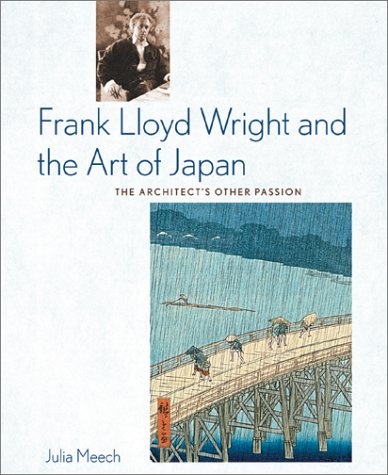
Frank Lloyd Wright and the Art of Japan: The Architect's Other Passion
About the Book
Frank Lloyd Wright and the Art of Japan: The Architect's Other Passion by Julia Meech represents the most comprehensive study of Frank Lloyd Wright's extraordinary relationship with Japanese art. Published in 2001 by Harry N. Abrams, this lavishly illustrated volume explores how Wright's passion for Japanese woodblock prints and other art forms profoundly influenced his architectural philosophy and design approach.
The book documents Wright's role as one of the most significant collectors and dealers of Japanese prints in early 20th-century America, revealing how his understanding of Japanese aesthetics shaped his concept of "organic architecture." Meech's research provides unprecedented insight into how Wright's appreciation for Japanese art extended far beyond mere collecting to become a fundamental influence on his architectural thinking.
Wright's Japanese Art Collection
Frank Lloyd Wright's relationship with Japanese art began in earnest during his 1905 visit to Japan, where he was introduced to the country's artistic traditions. Over the next five decades, Wright would amass one of the most significant collections of Japanese woodblock prints in the United States, including works by masters such as Hiroshige, Hokusai, and Utamaro.
Wright's collection was not merely that of a connoisseur—it was the foundation of his architectural education. He studied the prints for their compositional principles, their relationship to nature, and their ability to convey complex spatial relationships through simple, direct means. These lessons would become central to his development of organic architecture.
Meech's book reveals that Wright was also an active dealer of Japanese prints, using his sales to support his architectural practice during lean periods. This commercial aspect of his relationship with Japanese art adds another dimension to understanding how deeply integrated these influences were in his life and work.
Influence on Wright's Architecture
The book demonstrates how specific aspects of Japanese art directly influenced Wright's architectural approach:
- Elimination of the Insignificant: Wright learned from Japanese prints how to remove unnecessary elements to focus on essential forms and relationships
- Geometric Structure: The underlying mathematical principles in Japanese prints influenced Wright's approach to architectural composition
- Harmony with Nature: Japanese artists' depiction of the relationship between human activity and natural settings provided Wright with models for integrating architecture with landscape
- Organic Integrity: The unity of form and function in Japanese art became central to Wright's organic architecture philosophy
Julia Meech's Research
Julia Meech, a leading scholar of Japanese art and its influence on Western artists, spent years researching Wright's relationship with Japanese culture. Her work involved extensive archival research, including examination of Wright's personal correspondence, financial records, and the surviving portions of his print collection.
The book includes detailed analysis of specific prints that Wright owned, tracing how their compositional principles and aesthetic values appear in his architectural work. Meech also explores the broader cultural context of Japonisme—the European and American fascination with Japanese art that flourished in the late 19th and early 20th centuries.
Meech's research reveals that Wright's understanding of Japanese art was remarkably sophisticated, extending beyond surface aesthetics to fundamental principles of design and spatial organization. This depth of understanding explains why Japanese influences appear throughout Wright's career, from his early Prairie School houses to his later masterworks like the Guggenheim Museum.
Historical Significance
Frank Lloyd Wright and the Art of Japan is significant not only for its comprehensive documentation of Wright's Japanese art collection but also for its contribution to understanding cross-cultural influences in modern architecture. The book demonstrates how Wright's study of Japanese art provided him with tools to develop a distinctly American architectural language.
The publication coincided with a renewed interest in Wright's work and its global influences, helping to establish the architect's relationship with Japanese culture as a central aspect of his legacy. The book has become an essential resource for scholars studying both Wright's work and the broader phenomenon of Japanese influence on Western art and architecture.
Meech's work also sheds light on the complex relationship between collecting, scholarship, and artistic practice, showing how Wright's role as a collector and dealer of Japanese art was integral to his development as an architect rather than a separate interest.
Connection to the Collection
This book provides essential context for understanding several artifacts in our collection, particularly the Hiroshige harimaze print that comes from the very series Wright collected. The book's detailed analysis of Wright's Japanese print collection helps explain the significance of these works and their influence on his architectural philosophy.
The book also connects to Wright's autobiography, where he discusses his appreciation for Japanese art and its influence on his work. Together, these sources provide a comprehensive picture of how Japanese aesthetics shaped one of America's most influential architects.
For visitors to our collection, this book serves as a crucial resource for understanding the broader cultural and artistic context that influenced the artifacts on display, particularly those related to Wright's work and the cross-cultural exchanges that shaped modern design.
Related Artifacts
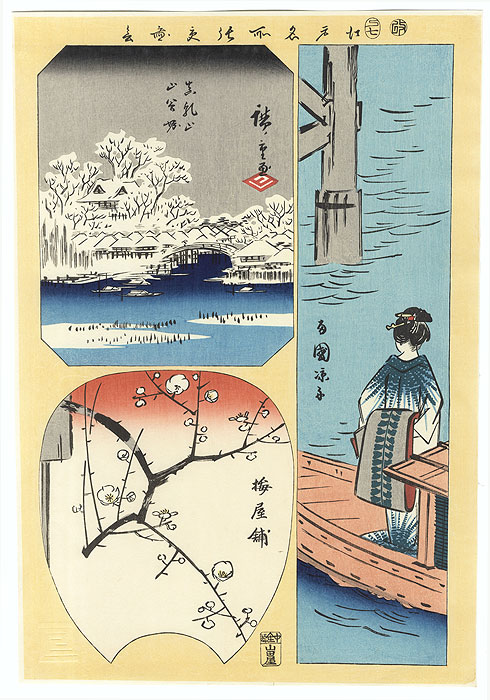
Hiroshige Harimaze Print
From the series Wright collected in 1913, showing the direct influence of Japanese art on his design philosophy.
View Details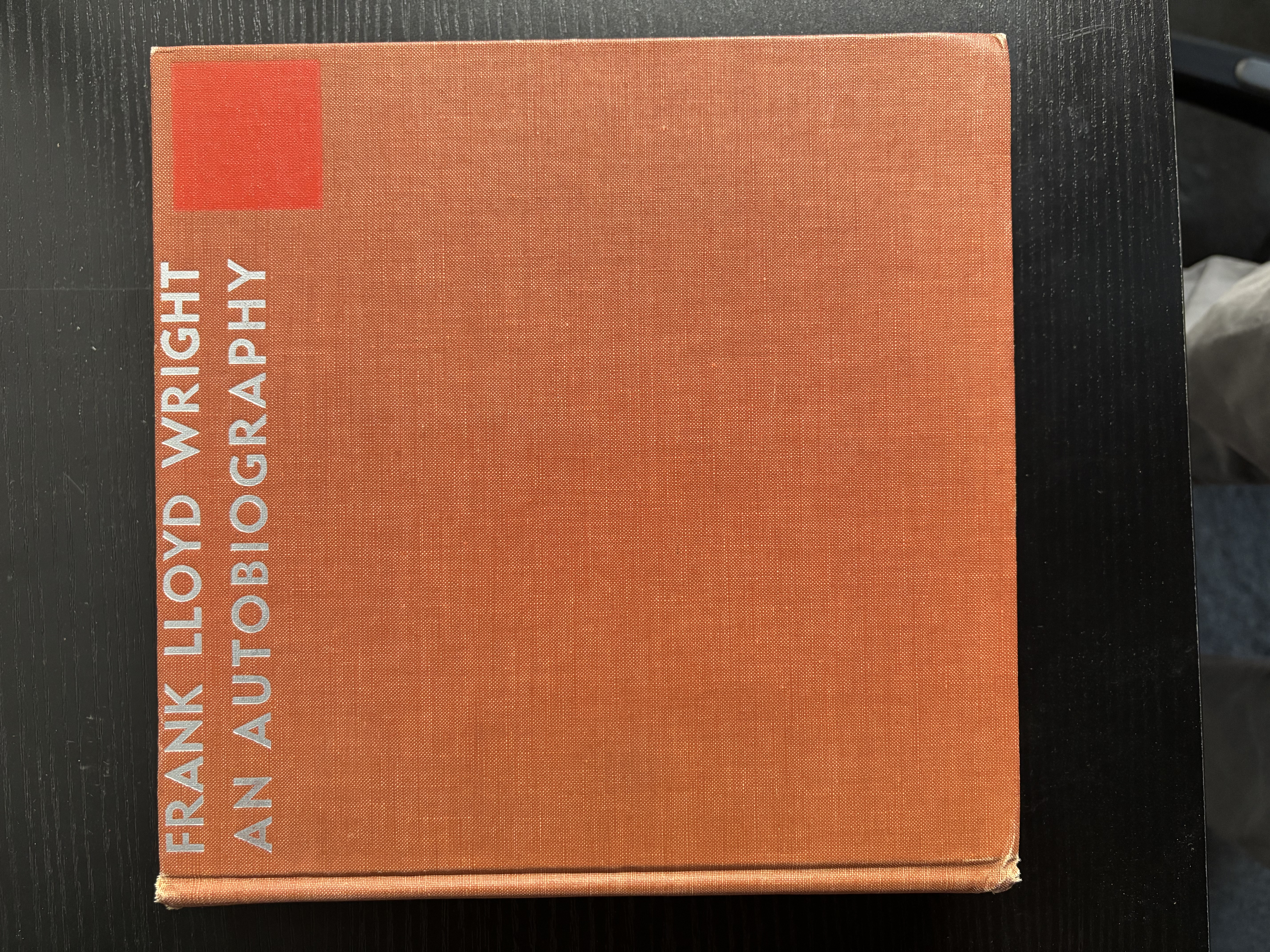
Frank Lloyd Wright: An Autobiography
Wright's own account of his architectural philosophy, including his appreciation for Japanese art.
View Details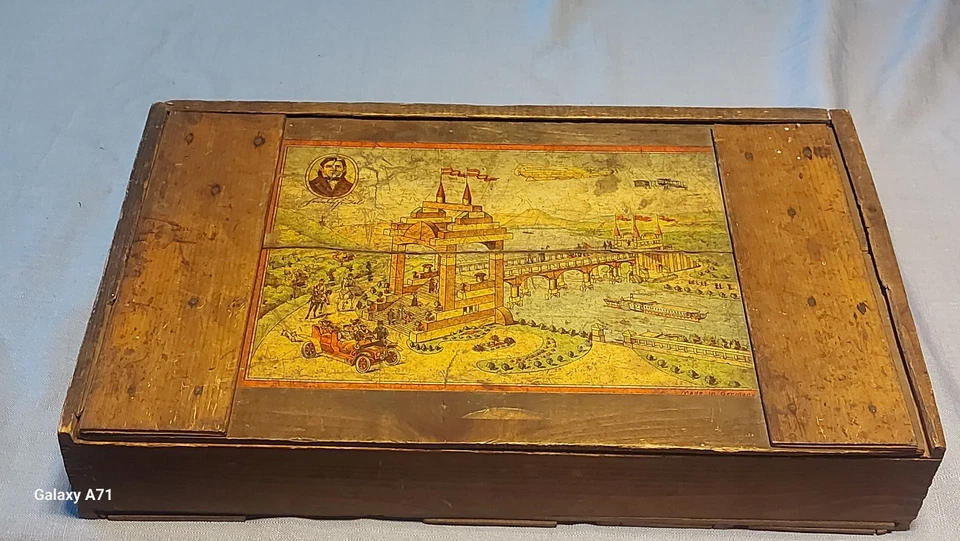
Froebel Blocks
Educational toys that, like Japanese prints, influenced Wright's understanding of geometric forms and spatial relationships.
View Details