
Frank Lloyd Wright Drawings: Masterworks from the Frank Lloyd Wright Archives
About the Book
Frank Lloyd Wright Drawings: Masterworks from the Frank Lloyd Wright Archives by Bruce Brooks Pfeiffer represents one of the most comprehensive collections of Frank Lloyd Wright's architectural drawings ever published. Published in 1990 by Harry N. Abrams, this lavishly illustrated volume provides unprecedented access to Wright's design process through his original sketches, plans, and renderings.
The book draws from the extensive archives at Taliesin West, where Pfeiffer served as director of the Frank Lloyd Wright Archives for decades. This unique position gave him unparalleled access to Wright's original drawings, many of which had never been published before. The result is a volume that reveals not just the finished buildings, but the creative process that brought them into being.
Wright's Drawing Process
Frank Lloyd Wright was a master draftsman whose drawings were not merely technical documents but works of art in their own right. His drawing style evolved throughout his career, from the detailed renderings of his early Prairie School period to the more abstract, conceptual sketches of his later years.
Wright's drawings reveal his approach to design as an organic process, where form emerged from careful consideration of site, function, and materials. His sketches often show multiple iterations of a design, demonstrating how he refined his ideas through drawing. The book captures this iterative process, showing how Wright's architectural vision developed from initial concept to final form.
Pfeiffer's selection includes drawings from all periods of Wright's career, from his early work in Chicago to his final projects like the Guggenheim Museum. This comprehensive coverage allows readers to trace the evolution of Wright's drawing style and architectural thinking over seven decades.
Types of Drawings Featured
The book showcases the full range of Wright's drawing output:
- Conceptual Sketches: Early freehand drawings that capture Wright's initial design ideas
- Presentation Drawings: Highly finished renderings used to communicate designs to clients
- Working Drawings: Detailed technical plans showing construction methods and materials
- Perspective Views: Three-dimensional representations that show how buildings would appear in their settings
- Detail Drawings: Close-up views of specific architectural elements and decorative features
- Site Plans: Drawings showing how buildings relate to their natural surroundings
Bruce Brooks Pfeiffer's Expertise
Bruce Brooks Pfeiffer was uniquely qualified to compile this collection. As director of the Frank Lloyd Wright Archives at Taliesin West for over 40 years, he had intimate knowledge of Wright's work and direct access to the architect's original drawings. Pfeiffer was also a former apprentice of Wright's, having studied at Taliesin in the 1950s.
Pfeiffer's deep understanding of Wright's work and his access to the archives allowed him to select drawings that best represent the architect's creative process and artistic vision. His commentary throughout the book provides valuable context for understanding the significance of each drawing and its place in Wright's overall body of work.
The book benefits from Pfeiffer's ability to place each drawing within the broader context of Wright's career and architectural philosophy. His insights help readers understand not just what they're looking at, but why it matters in the history of architecture.
Historical Significance
Frank Lloyd Wright Drawings: Masterworks is significant for several reasons. First, it provides unprecedented access to Wright's original drawings, many of which had never been published before. This makes the book an essential resource for scholars, architects, and anyone interested in understanding Wright's design process.
The book also demonstrates the artistic quality of Wright's drawings, showing that they are not just technical documents but works of art that stand on their own merit. This aspect of Wright's work had been somewhat overlooked in previous publications, which tended to focus on the finished buildings rather than the creative process that produced them.
Additionally, the book serves as a valuable record of architectural drawing techniques and presentation methods from the early to mid-20th century. Wright's drawings show how architectural ideas were communicated before the advent of computer-aided design, revealing the skill and artistry required to create compelling architectural presentations.
Connection to the Collection
This book provides essential context for understanding the design process behind many of the artifacts in our collection. Wright's drawings show the same principles of organic architecture and geometric thinking that influenced his work and the work of his apprentices.
The book connects particularly well to the Froebel blocks in our collection, as Wright's drawings often show the geometric principles and spatial relationships that he first learned through playing with these educational toys. The drawings also demonstrate the influence of Japanese art on Wright's work, connecting to the Hiroshige print and the book about Wright's Japanese art collection.
For visitors to our collection, this book serves as a crucial resource for understanding how Wright's ideas developed from concept to reality, providing insight into the creative process that produced some of the most important buildings of the 20th century.
Related Artifacts
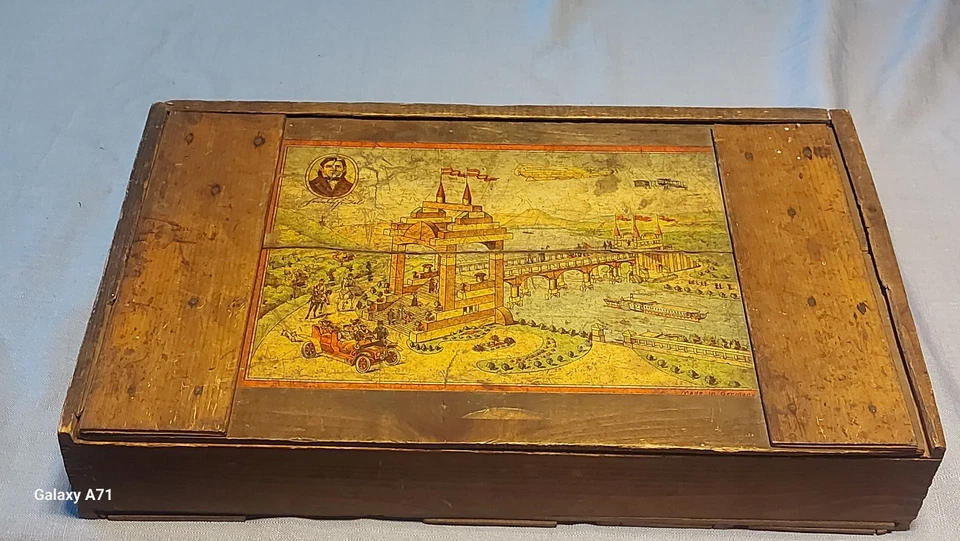
Froebel Blocks
Educational toys that influenced Wright's understanding of geometric forms and spatial relationships, evident in his drawings.
View Details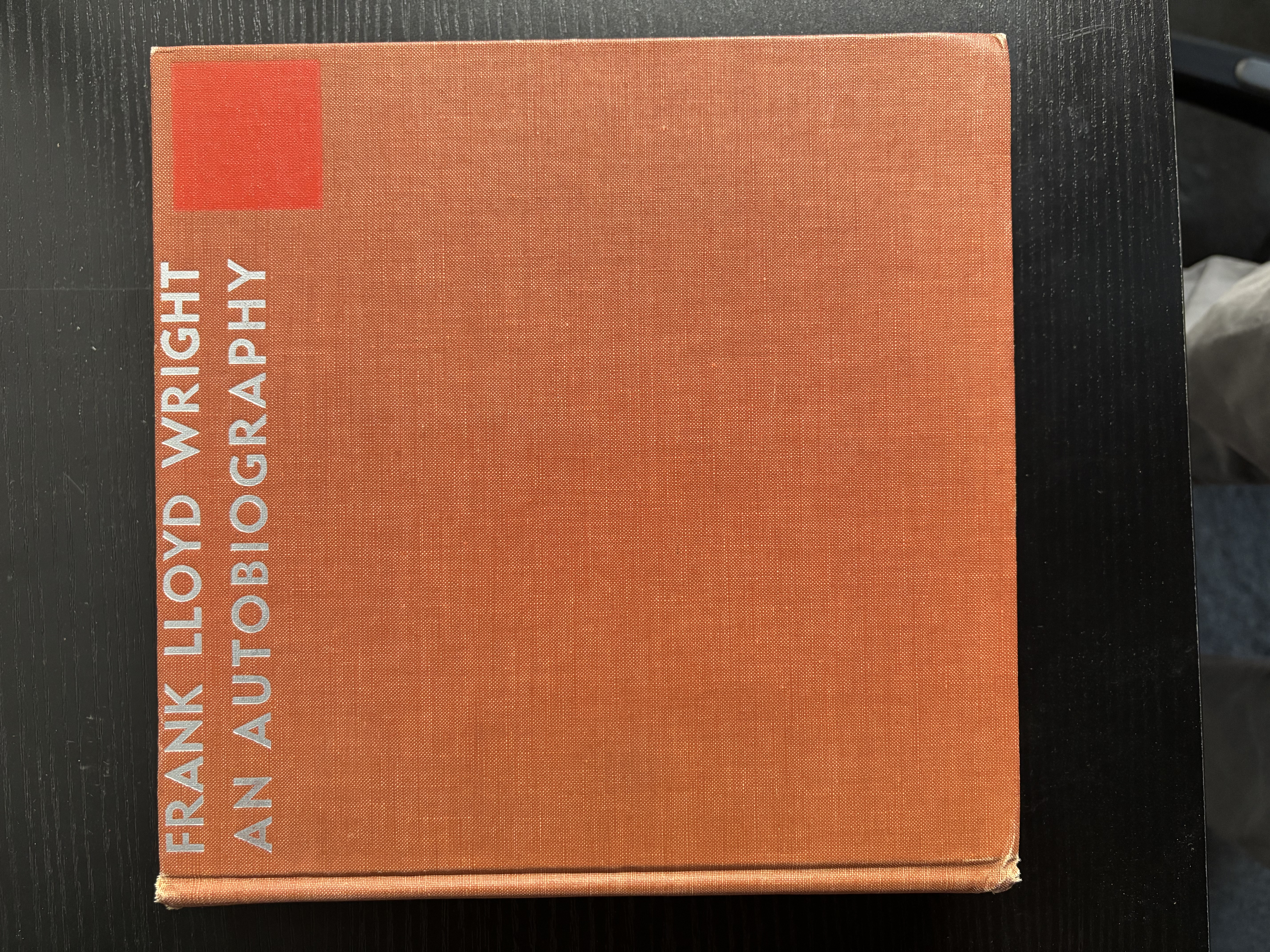
Frank Lloyd Wright: An Autobiography
Wright's own account of his architectural philosophy and the thinking behind his designs.
View Details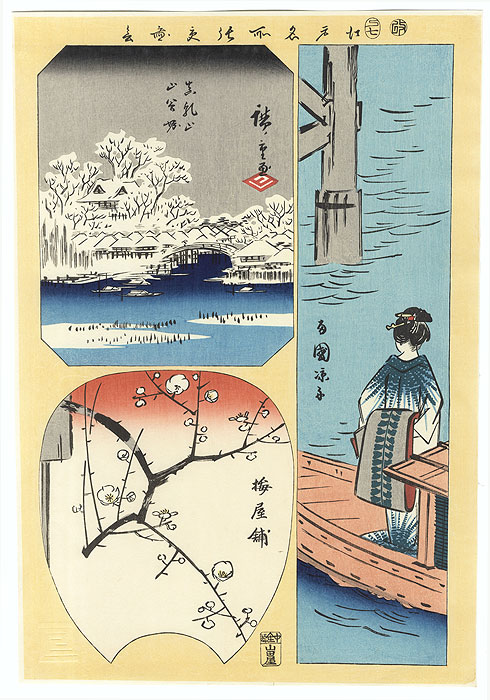
Hiroshige Harimaze Print
Japanese art that influenced Wright's compositional approach and drawing style.
View Details