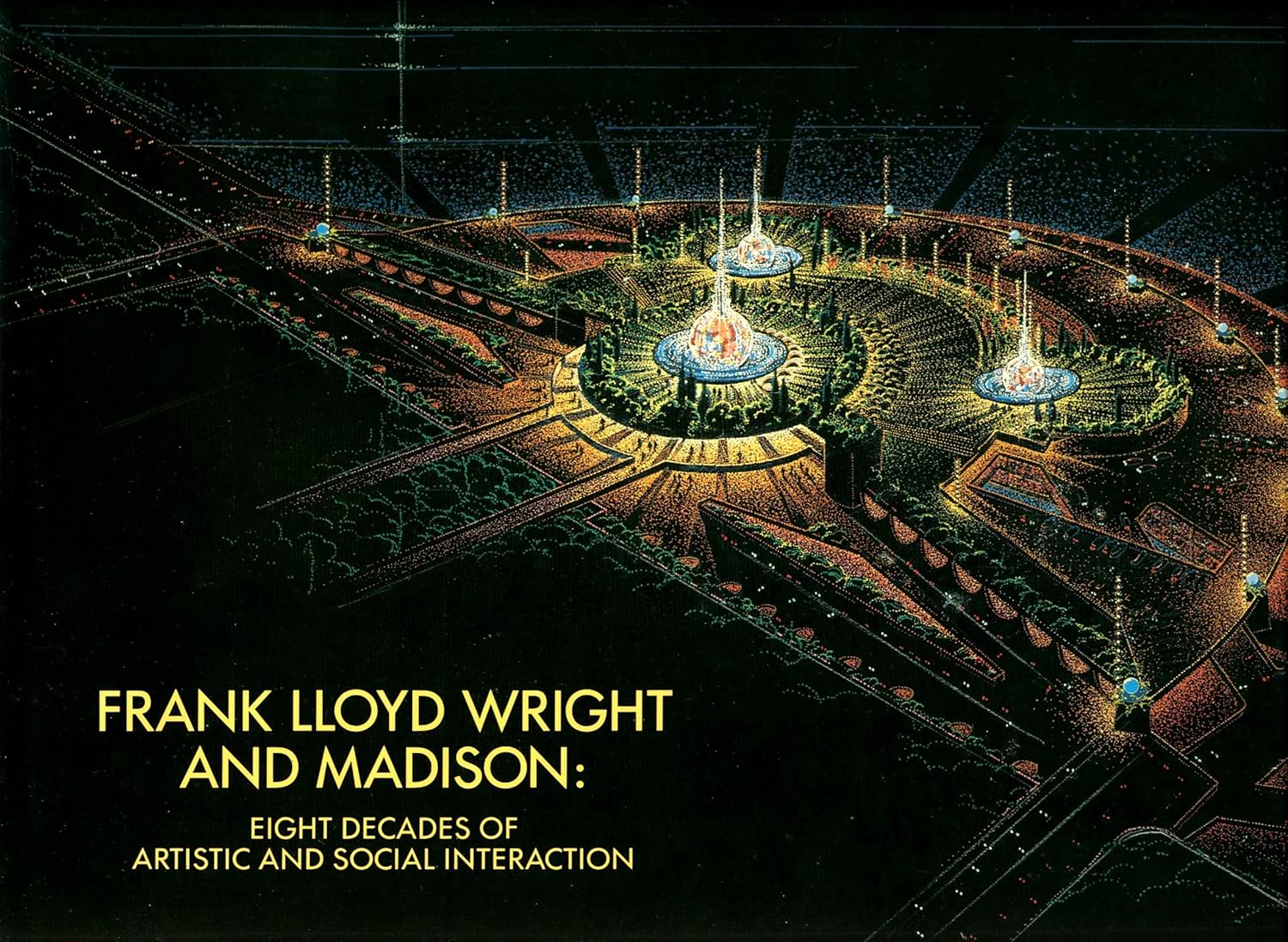
Frank Lloyd Wright and Madison: An Interaction
About the Book
Frank Lloyd Wright and Madison: An Interaction is a significant exhibition catalog published by the Elvehjem Museum of Art (now the Chazen Museum of Art) at the University of Wisconsin-Madison in 1990. This publication documents a major exhibition that explored the complex and often controversial relationship between Frank Lloyd Wright and the city of Madison, Wisconsin.
The book serves as both a historical record and a scholarly analysis of Wright's various interactions with Madison, from his early architectural commissions to his ambitious but unrealized urban planning proposals. It provides insight into how one of America's most influential architects attempted to shape the development of a specific American city.
Wright's Madison Connections
Frank Lloyd Wright's relationship with Madison began early in his career and continued throughout his life. Born in Richland Center, Wisconsin, and educated in Madison, Wright maintained strong ties to the state capital. His connections to Madison were both personal and professional, involving family, clients, and his vision for the city's future development.
The book documents Wright's various Madison projects, including:
- Early Residential Work: Several private homes designed for Madison clients
- University of Wisconsin Projects: Various proposals for campus buildings and master planning
- The Monona Basin Project: His most ambitious and controversial Madison proposal
- Unbuilt Visions: Numerous other projects that were proposed but never realized
These projects demonstrate Wright's evolving relationship with the city and his attempts to apply his organic architecture principles to urban planning on a large scale.
The Monona Basin Project
A significant portion of the book is devoted to Wright's most ambitious Madison project—the Monona Basin development. First proposed in 1938, this comprehensive urban planning project aimed to create a harmonious connection between Madison's Capitol Square and the shores of Lake Monona.
The Monona Basin Project represented Wright's vision for organic architecture applied to city-scale development. It included plans for a convention center, civic auditorium, integrated transportation systems, public spaces, and mixed-use development. The project was controversial from its inception, challenging conventional urban planning approaches with Wright's revolutionary ideas.
The book documents the project's evolution, the public reaction to Wright's proposals, and the eventual partial realization of his vision through the construction of Monona Terrace in 1997, which was based on Wright's original 1938 design concepts.
Exhibition Context
The publication accompanied a major exhibition at the Elvehjem Museum of Art that brought together drawings, models, photographs, and documents related to Wright's Madison projects. The exhibition was significant because it represented one of the first comprehensive examinations of Wright's relationship with a specific American city.
The exhibition and book were part of a broader effort to understand Wright's urban planning legacy, which had been somewhat overlooked in favor of his individual buildings. By focusing on Madison, the project revealed how Wright's architectural philosophy could be applied to comprehensive city planning.
The catalog includes contributions from various scholars and experts, providing multiple perspectives on Wright's Madison work and its significance in the broader context of American urban planning history.
Historical Significance
Frank Lloyd Wright and Madison: An Interaction is significant for several reasons. First, it documents a crucial aspect of Wright's career that has received relatively little attention—his urban planning work and his attempts to apply organic architecture principles to city-scale development.
The book also provides valuable insight into the challenges faced by visionary architects when attempting to implement large-scale urban projects. Wright's Madison proposals, particularly the Monona Basin Project, demonstrate the tension between innovative architectural ideas and practical urban development constraints.
Additionally, the publication serves as an important record of Madison's architectural and planning history, documenting a period when the city was considering radical alternatives to conventional urban development approaches. The book helps explain why some of Wright's most ambitious urban planning concepts were never fully realized.
Connection to the Collection
This book provides essential context for understanding the Monona Basin Project document in our collection. The exhibition catalog helps explain the broader context of Wright's Madison work and the significance of the 1967 master plan by William Wesley Peters.
The book connects to several other artifacts in our collection, particularly Wright's autobiography, where he discusses his vision for American cities and his belief in the potential of architecture to improve urban life. It also relates to the broader theme of how Wright's influence extended beyond individual buildings to encompass entire communities.
For visitors to our collection, this book serves as a crucial resource for understanding how Wright's architectural philosophy could be applied at the urban scale, providing context for the Monona Basin Project and other urban planning artifacts in the collection.
Related Artifacts
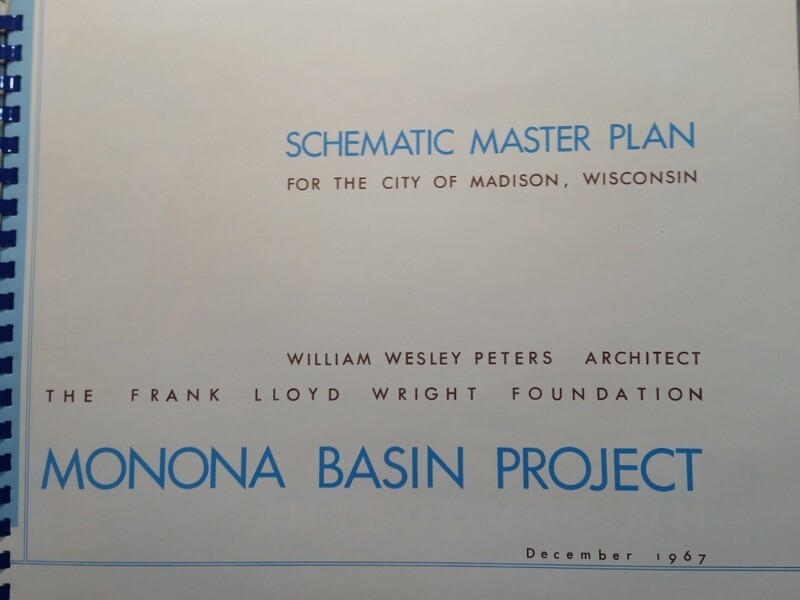
Monona Basin Project
William Wesley Peters' 1967 master plan continuing Wright's vision for Madison's waterfront development.
View Details
Frank Lloyd Wright: An Autobiography
Wright's own account of his architectural philosophy and his vision for American cities.
View Details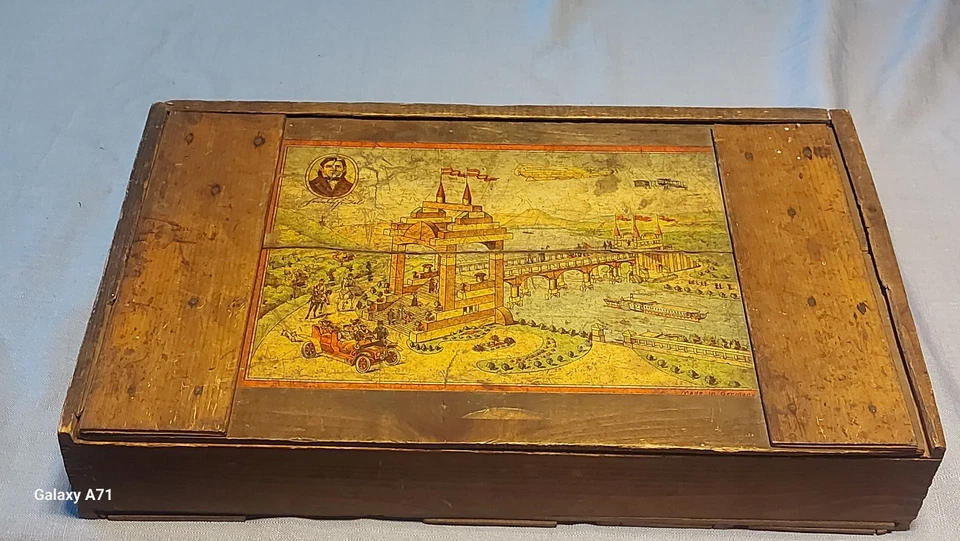
Froebel Blocks
Educational toys that influenced Wright's understanding of geometric forms and spatial relationships in urban planning.
View Details